Ahamefule J. Oluo
Shrill: Notes from a Loud WomanAhamefule J. Oluo, known as Aham, is a comedian and jazz musician whose relationship with Lindy West grows from a friendship in comedy into a lasting partnership. Their story turns on candidness and care: a conversation about the stigma attached to herpes changes how he sees West, while a later separation gives way to his presence during her family’s bereavement and, eventually, their marriage. The account presents him not only as West’s romantic partner but as someone who becomes part of the family she once struggled to imagine for herself.
Identity and Introduction
Aham and West had spent five years crossing paths at house parties and open mics before they became close. West describes him as an insightful, fearless comedian and one of her favorites. She also learns that he is a jazz musician, a detail that links him in her mind to her father, who was also a musician. Other parallels sharpen that first impression: Aham had been divorced multiple times and had two children, and he had had a vasectomy, as West’s father had when he met her mother. A mutual friend had also told her that Aham was a good cook. These details register as reasons to hesitate before speaking openly to him, but West pushes past that hesitation.
The occasion is a discussion of jokes about herpes and the pressure on people with the condition to hide their experience while laughing along. West tells Aham that she could have herpes, then argues that an audience may include people who feel compelled to conceal the same thing. Aham is startled, but responds by acknowledging that he, too, could have herpes. The exchange is brief, yet it changes the terms of their acquaintance: West has challenged stigma in front of him, and he takes her candor as evidence of a moral seriousness that had not been apparent to him before.
From Comedy Friends to Partners
Years later, Aham tells West that he had long admired her writing. Her directness during their conversation made him see her not only as funny but as an unusually good person. The shift is reciprocal in effect, though the evidence records his change in perception specifically: a subject that might have been treated as embarrassing instead becomes the occasion for respect and connection.
They spend the rest of that weekend together, going to an arcade, playing Plinko for hours, drinking beer, and helping Hari Kondabolu devise insults during a text dispute with Marc Maron. Within a year, Aham and West are a couple. Aham and West’s father also begin playing gigs together, bringing the parallel between the two musicians into their shared life rather than leaving it as an observation West made when she first considered him. For West at twenty-two, the combination of time with comedians, falling in love, and spending the day riffing together resembles the life she had imagined. At the same time, she recognizes that her relationship with comedy is changing. Aham’s importance therefore belongs both to her romantic story and to a shift in how she understands the work and culture around them.
Separation and Strain
The relationship later deteriorates. West recalls the decline as swift: she feels that she is simultaneously too much and not enough, while Aham is depressed, distant, and mean. She responds by pressing closer with increasing urgency; he withdraws, and the distance between them widens. His elimination from a comedy competition is followed by anger. On Halloween, he tells her she cannot join him at a party because there are no plus-ones. He returns at five in the morning, and the night ends with West in tears. The sequence conveys the relationship’s painful imbalance without reducing the conflict to a single dispute: her pursuit and his retreat reinforce one another, while neither can make the closeness she wants secure.
West later interprets her conduct through the history of feeling worthless and unlovable, a conviction she associates with her years at Occidental College. She recognizes that she had placed that burden on Aham as if a partner could carry it for her. Her retrospective account distinguishes the wish to be loved from the work of addressing the belief that she was unworthy of love. Aham is part of this painful period, but the narrative does not make him responsible for resolving it. At the point of acute uncertainty, West asks whether they will be all right; he has his back turned. The image marks how little reassurance the relationship can offer her then.
Care During Bereavement
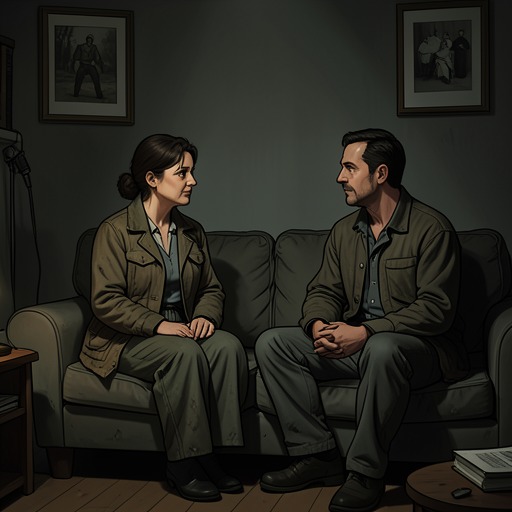
After West’s father dies, she asks Aham to come be with her family. They are not formally back together, but their connection has not disappeared. He shares her bed and holds her when she needs comfort, while also helping her mother: he runs errands, makes her laugh, cooks eggs Benedict, arranges for a piano player at the funeral, and works out how to secure a banquet license while West cries in a liquor store. These are distinct acts of practical and emotional care, carried out amid the arrangements and distress surrounding the death.
Relatives, Aham’s daughters, friends, and family gather at the small white house, sharing beer and watching football. West remembers the crowded, disorderly household as a kind of family life that her mother had loved but that West had not understood while growing up more alone. Even in what she calls the saddest month of her life, she can look back and find a vein of joy. She and Aham insist that they are not getting back together, yet his actions make clear that their bond exceeds the terms of their separation: without either of them formally declaring a reunion, he has become family.
Marriage and Narrative Role
Aham and West eventually marry. Their wedding is described as chaotic, loving, and joyful; his hundred-year-old great-grandmother suffers a stroke on the way to the ceremony, recovers in hospital, and still comes to celebrate. West and Aham write their vows only five minutes before the ceremony. In his, Aham recalls how he used to ask West to spend time with him and how often she cancelled, turning that old frustration into affectionate proof that he had wanted her company all along. He presents their eventual closeness as confirming the strength of that earlier hope, and West’s response in her own vow expresses happiness beyond what she had thought possible.
West’s later acknowledgment of her husband gives the relationship a final, direct measure: she praises Aham as a thinker, joke writer, and artist, but values him even more as a partner. Taken together, the episodes make his role larger than that of a romantic reward at the end of a difficult period. He first appears as a fellow comic whose response to a difficult conversation is to recognize its point; he then shares West’s work and family life, withdraws during a damaging phase, and returns as a source of care when her family is grieving. Their marriage follows that history rather than erasing it, making companionship an ongoing choice shaped by humor, vulnerability, and acts of support.